


Pines Peak: Merge Travel Games
4.7312.00 Reviews
App Specs
- Version
- 12607.1.2
- Updated On
- License
- Free
- Downloads
- 100,000+
- Developer
- VIZOR APPS LTD.
- Categories
- Puzzle
- Platform
- Android
Screenshots





 Analysis by AppCompare
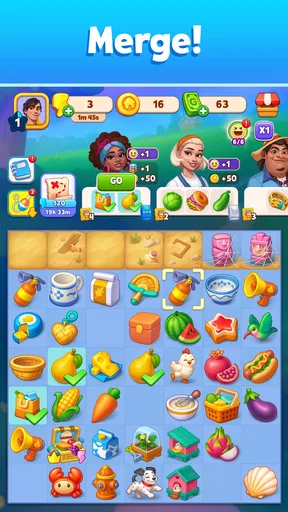
I went into Pines Peak: Merge Travel Games expecting a light puzzle game, but its main appeal is more specific than that. The central activity is merging: I combine matching objects to create something more useful, then use the result to keep the surrounding journey moving. That simple loop gives the game a pleasant rhythm, especially when I want a few quiet minutes rather than a demanding challenge.
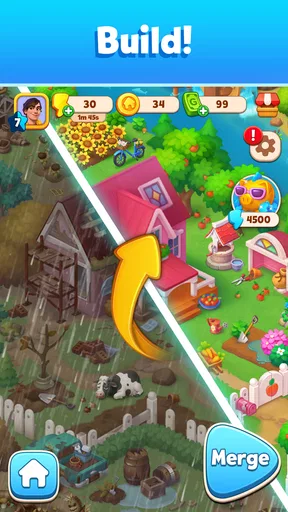
What makes the experience stand out is how the merge mechanic is tied to a broader travel-and-building setting. The game presents a cheerful world involving a magic town, a mansion, an island and a harbor, so each small combination feels connected to a larger place. I am not just clearing identical pieces from a board; I am gradually helping a setting develop through puzzle decisions and short-term goals.
It is a free puzzle game from VIZOR APPS LTD., rated for Everyone. The current version is 12607.1.1, and it runs on devices using Android 6.0 or later. Its average rating is 4.8 from around 6.6 thousand ratings, while the game has passed 100 thousand installs. Those figures suggest that the format has found an audience, but they do not change the most important question: whether you enjoy planning around limited space and waiting for the right combination.
Why the merge mechanic carries the whole experience
I find that the merge mechanic is what gives every small decision its weight: combining objects can answer an immediate goal, but it can also change how much room I have for the next useful move. In this section, I’ll look at why that balance makes the board more than a routine matching exercise, and how the game’s travel setting gives those choices a reason to matter.
Small combinations, larger consequences
The strongest part of the game is the way one merge can alter several decisions at once. A new object may solve an immediate task, but using it too quickly can leave the board less flexible for the next request. I found myself looking beyond the next available combination and asking whether I should keep a pair together, create a higher-level item, or clear room for objects that have not yet found a use.
That is where the puzzle element becomes more interesting than simple matching. The action itself is easy to understand, yet the order of actions matters. If I merge everything as soon as possible, I can make the board look tidy while losing the pieces needed for a more valuable chain. If I hold too much, the play area becomes crowded and the game feels slower. The enjoyable skill is finding the middle ground.
The real challenge is space management, not fast tapping. I would not recommend approaching it like an arcade game. It rewards a calm glance at the board, a little forecasting and the willingness to delay a satisfying merge when a better setup is forming. That makes it suitable for relaxed play, but less suitable for anyone looking for constant action or reflex-based difficulty.
Worth Reading Before You Choose

Baby Panda World Brings Quick Play to Modern Phones, but Its Game Library Feels Busy

ESPN’s Live Game View Makes Following Close Games Easier

QuizzLand Review: A Good Fit for Short Trivia Breaks, Not Every Player

Basketball Stars: Multiplayer Is Fast, but Can It Recover When Matches Go Wrong?

WEBTOON Turns Phone Updates Into a Better Reading Routine

Link to Windows Runs on Shared Habits, Not Social Feeds
A travel setting that gives the puzzles direction
The travel theme helps prevent the merge board from feeling completely abstract. The town, mansion, island and harbor give the game a sense of movement, even when the immediate task is simply combining objects. I enjoy that connection because it gives a reason to care about the next step. Completing a small objective feels like progress through a place rather than an isolated score increase.
The setting also affects how I pace myself. When I am focused on a local objective, I tend to make careful short-term plans. When I think about the wider journey, I become more selective about spending useful items. This two-level view is a quiet strength: the board handles the puzzle, while the surrounding world supplies motivation.
Still, the theme will not transform the game into a story-heavy adventure. The appeal remains the merge loop. Players who need deep narrative choices, complex character systems or a large amount of direct exploration may find the travel presentation lighter than expected. I see it as atmosphere and progression wrapped around a puzzle, not as a substitute for a traditional adventure game.
How I approach a crowded board
My most useful habit was to avoid merging automatically. I first looked for groups that could create an immediate objective item, then checked whether that move would block a more promising chain. This took only a few seconds, but it made the board feel much more manageable. The game is friendlier when I treat every empty space as a resource.
I also found it helpful to separate urgent moves from valuable moves. An urgent move opens room or answers the current need. A valuable move advances a chain that may take longer to complete. Mixing those two priorities is a common source of frustration: chasing only the largest possible merge can leave the board jammed, while clearing space constantly can slow overall progress.
Another practical tip is to pause before using a newly created item. I ask whether it completes a goal, unlocks a useful position or merely looks like progress. That short check prevents wasteful combinations and makes the game feel more strategic without turning it into a spreadsheet. It is a small workflow, but it is one of the reasons I kept returning to the board.
What a normal play session feels like
In everyday use, I can imagine opening the game while waiting for an appointment or taking a break between tasks. I make a few merges, clear a blocked section and stop when the next decision would require more attention than I have available. The format works well for that kind of interrupted session because the basic actions are easy to resume after a pause.
On a longer evening session, the same simplicity can become repetitive if I am not in the mood for methodical planning. The game does not rely on quick reactions to keep me engaged. Instead, it asks me to enjoy incremental progress and the satisfaction of turning several modest pieces into one more useful result. That is relaxing for me, but it will not suit every mood.
The best everyday scenario is a player who likes gentle puzzles and wants a clear activity that can be picked up repeatedly. I would choose it over a more intense puzzle title when I want to unwind, especially if the idea of improving a colorful destination appeals to me. I would choose a faster match game instead when I want immediate rounds, rapid scoring and less concern about the long-term arrangement of the board.
Where the design asks for patience
The main trade-off is that progress depends on accepting a slower rhythm. Merging is satisfying, but the payoff often comes from preparing several steps rather than making one dramatic move. If I am impatient, I am more likely to spend useful pieces too early and then feel that the board has become awkward. The game is not difficult because the controls are complicated; it is demanding because restraint matters.
There is also a difference between a free download and a completely cost-free experience. The game is free to play, with in-app purchases ranging from $0.99 to $99.99 per item. I would keep that in mind before handing the device to a child, even though the content rating is Everyone. The safest approach is to review the device’s purchase controls and decide in advance whether optional spending is acceptable.
I appreciate that the game can be enjoyed without turning every decision into a purchase, but players who dislike any form of optional monetization may still prefer a paid puzzle with a fixed structure. That is not a criticism of the merge idea itself; it is a question of what kind of ownership model feels comfortable to you. The free entry is convenient, while the possible purchase range deserves awareness.
How it compares with familiar puzzle alternatives
Compared with a traditional match-three game, this title feels more patient and more positional. A match-three board usually emphasizes forming combinations quickly and reacting to what appears next. Here, I get more value from arranging, saving and combining objects with a future step in mind. The satisfaction is less about a chain reaction and more about making the board gradually work for me.
Compared with a pure decoration or town-building game, the puzzle decisions are more central. I cannot simply focus on visual customization and ignore the board. The merge process is the engine that produces progress, so anyone who finds object management tedious may not enjoy the surrounding setting enough to compensate.
Compared with a story-driven mobile adventure, the game offers a lighter commitment. I can engage with the setting through its locations and objectives without needing to follow a complicated plot. That makes it easier to play casually, although it also means that players seeking rich narrative development may be better served elsewhere.
For me, the most important distinction is between planning and speed. If I want a puzzle that rewards looking two or three moves ahead, Pines Peak is a good fit. If I want a game that tests reaction time, delivers short competitive rounds or provides a fixed beginning and ending, I would pick a different category of puzzle instead.
Who will get the most from it
I think the strongest audience is made up of players who enjoy gradual progress, colorful travel settings and puzzles that remain approachable while still offering room for better decisions. It is also a good match for people who like returning to the same board over several short sessions. The basic concept is accessible, but careful players can find depth in how they preserve space and sequence their merges.
Families may appreciate the Everyone rating and the straightforward premise, but I would still treat the purchase options as a separate consideration. Younger players can understand the combining mechanic quickly, while adults may be the ones who enjoy the planning layer. Whether it works as a shared game depends on how much each person enjoys taking turns with a board that rewards patience rather than speed.
I would be more cautious about recommending it to someone who becomes frustrated by waiting, repeated collection tasks or a board that can feel full before the next useful move appears. It is also not my first choice for a player who wants a highly competitive puzzle, a strong multiplayer focus or a self-contained premium experience with no optional spending. Knowing that before installing it saves disappointment.
Practical advice before settling in
When starting, I would resist the urge to treat every available merge as automatically correct. Look at the current objective, identify which pieces are difficult to replace and keep a little room available for the next sequence. This approach makes the early learning period smoother and helps reveal whether the game’s deliberate style suits you.
I would also play with a clear stopping point. Once the board becomes crowded and I am making moves without checking their consequences, I usually get less enjoyment and make poorer choices. Closing the game and returning later is not a failure; the design works particularly well when I give each session enough attention to make thoughtful decisions.
Finally, decide how you feel about optional purchases before progress becomes important to you. The free entry makes trying the game easy, and the Everyone rating keeps its presentation broadly accessible, but a personal spending limit is still sensible. That small bit of preparation lets me judge the puzzle on its own merits instead of being surprised by the commercial layer.
My final take on the journey
After spending time with it, I see Pines Peak as a merge puzzle with a travel identity rather than a travel game that happens to contain puzzles. That distinction matters. Its strongest moments come from arranging the board, protecting useful space and choosing the right time to combine objects. The town, mansion, island and harbor give those decisions a pleasant sense of purpose, but the merge loop remains the reason to stay.
I recommend it to anyone who likes relaxed, organized puzzle play and enjoys watching a setting develop through small accomplishments. I would skip it in favor of a faster or more competitive alternative if I wanted constant action, instant rounds or a completely fixed-price experience. For the right player, though, its measured pace is exactly the point.
My verdict: this is a friendly, thoughtful puzzle for short breaks and steady progress. It asks for patience, rewards planning and makes the most of a simple capability by connecting each merge to a larger journey. If that combination sounds appealing, the free download is an easy way to see whether its quiet rhythm fits the way you like to play.
Pros
- Relaxing merge puzzles are easy to learn and enjoyable for casual play.
- Travel-themed locations provide visual variety as you progress.
- Short tasks make it suitable for quick gaming sessions.
- The game offers a gentle pace without demanding fast reflexes.
- Combining items creates satisfying chains and clear objectives.
Cons
- Energy limits can interrupt play during longer sessions.
- Some upgrades and progress may require considerable repetition.
- The small item board can become crowded as objectives increase.
- Later puzzles may feel less varied for experienced merge players.
- Optional purchases may speed up progress for impatient players.
FAQs for Pines Peak: Merge Travel Games
What is Pines Peak: Merge Travel Games about?
Pines Peak: Merge Travel Games is a casual puzzle and adventure game centered on combining matching items to complete tasks, unlock useful resources, and gradually improve different locations. As you progress, the game introduces new objectives, characters, and areas to explore. Its relaxed presentation makes it suitable for players who enjoy story-driven merge games rather than fast-paced action.
How does the merging gameplay work in Pines Peak?
The main gameplay involves dragging identical objects together to create upgraded items. These improved items can then be merged again or used to fulfill requests and restore parts of the game world. Energy, space, and item availability are important because the board can become crowded. Planning combinations instead of merging everything immediately helps you progress more efficiently.
Can Pines Peak: Merge Travel Games be played offline?
Some basic sections may remain accessible without a continuous internet connection, but the complete experience can depend on online services. Features such as advertisements, purchases, cloud synchronization, events, updates, or certain rewards may require an active connection. If you are traveling or have limited data, it is best to test the game offline after installation rather than assuming every feature will work.
Does Pines Peak include in-app purchases or advertisements?
Pines Peak: Merge Travel Games may use optional in-app purchases and advertising as part of its free-to-play structure. These can typically provide extra energy, speed up timers, offer resources, or unlock convenience bonuses. You can usually make progress without paying, although waiting periods and limited energy may encourage optional spending. Review the store listing and device purchase settings before playing.
Is Pines Peak: Merge Travel Games suitable for children?
The game’s simple controls and non-violent merge mechanics can make it approachable for younger players, but parents should still check its age rating, privacy information, and advertising practices. If purchases are available, enable parental controls to prevent accidental transactions. The game may also include timers, promotional offers, or online features, so supervision is recommended for children using a shared device.


